

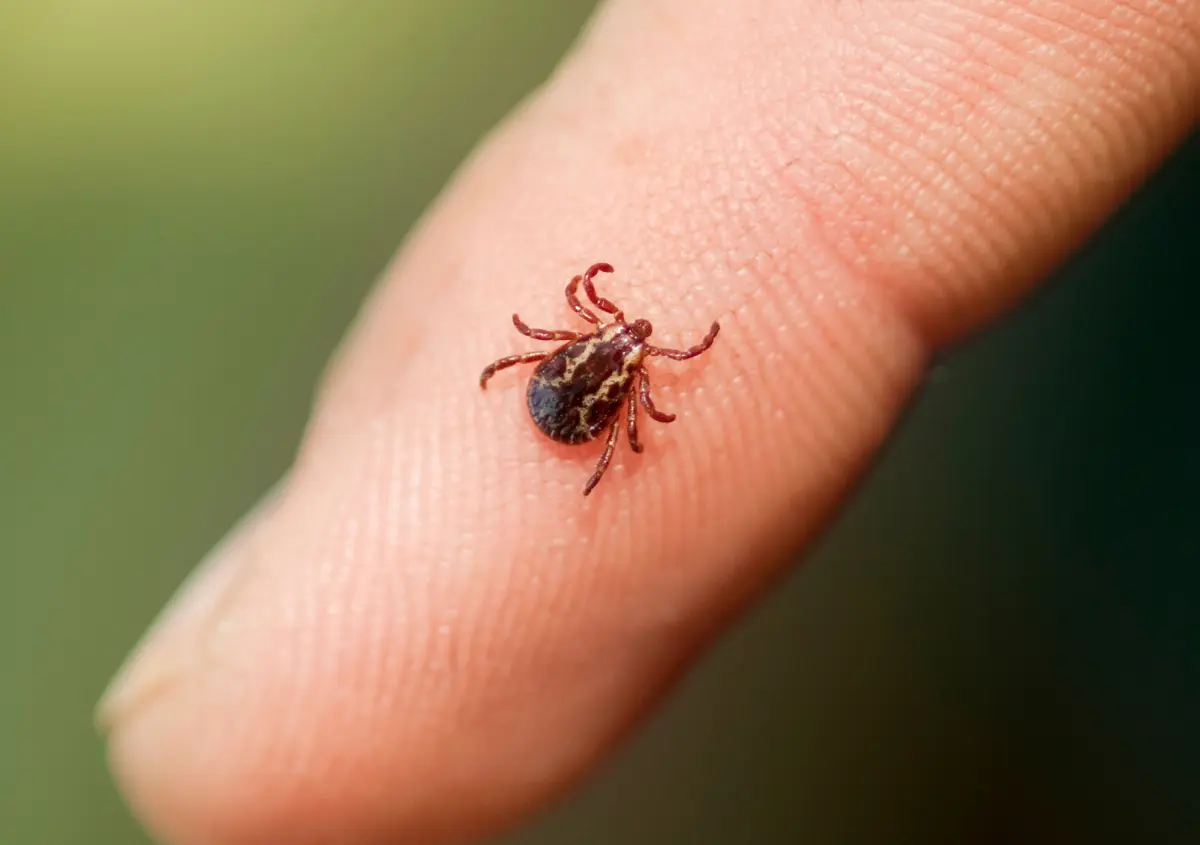
The warm season, from early April to October, is a period of high activity of ticks in household plots and in forest park areas. These insects parasitize on the skin of humans, birds and warm-blooded animals, feeding on their blood. These are very dangerous and unimaginably tenacious pests. It is difficult to deal with them, because ticks are able to live without food for up to 2 years, endure temperature changes, drought – any climatic conditions. Ticks are terrible because they carry a number of diseases that are dangerous to human and animal life.
Ticks are arthropods from the class of arachnids, which includes more than 54 thousand species! The danger is represented by representatives of the Ixodida order, argas, scabies, rats, red-haired and house dust mites.
Depending on the species, these bloodsuckers wait for their prey either in dense thickets of plants, or in the ground, or in closed natural and economic biotypes (associated with humans) – foundation cracks, house walls, fences, attics, etc. Rat mites often accompany rodents, and dust mites are ubiquitous. Thus, it should be understood that these microscopic creatures can be found anywhere.
Tick Treatment Methods
Treatment of sites from ticks is carried out from April to October. Independent – is unlikely to give a positive result. It is difficult for an ignorant person to detect a colony and destroy all parasites. CPG Pest Control carries out the treatment of ticks with modern effective preparations of the company. The method of their application depends on the type of insects to be destroyed and the characteristics of the object itself.
So, indoors we work exclusively with cold fog generators. Passing through the nozzle of the device, the insecticide decomposes into fine dust (5-50 microns), which penetrates into hard-to-reach places, leaving insects no chance.
On the street, a hot fog generator is considered more efficient, operating on the same principle, but heating chemicals to a temperature of 50 degrees. This method allows you to process a very large area in a short time. However, due to the volatility of the hot insecticide and, as a result, the high probability of poisoning the neighbors, the hot mist generator is not used indoors.
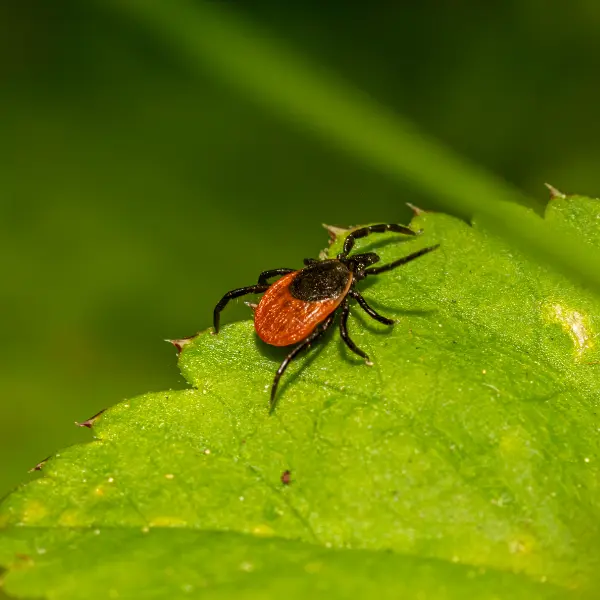
Tick habitats
There is an opinion that ticks attack humans and animals in the warm season – from the arrival of spring to the middle or end of summer. But it’s not. Indeed, during this period, ticks are most active, because, like all representatives of the fauna, at this time they begin the breeding season. In addition, it is with the advent of heat that a person’s clothes become thinner, there are more open areas of the skin. For ticks, this is the peak of activity, because it becomes easy to hunt an unprotected person.
For a full-fledged life of a tick, a positive temperature just above zero is enough. Therefore, the habitat of these insects is huge. They live even in cold regions and in the subtropics. Therefore, ticks are almost everywhere. Insects have perfectly adapted to urban life, which fully meets their requirements for an ideal environment for existence and reproduction. And the demands of parasites are small: the proximity of vegetation, humidity or extreme dampness, but the priority is the availability of food, which is the blood of humans and warm-blooded animals. In search of these conditions for life, ticks travel great distances, even migrate between continents. To move the parasites use the feathers of birds, cling to human clothing. Ticks are carried by rodents, wild and stray animals.
You can meet ticks and get bitten in the following places:
- Forest;
- Country cottage area;
- Recreation center;
- Sanatorium or camp;
- City park or square;
- Playground;
- Venues for outdoor festivals and citywide events.
Many mistakenly believe that ticks guard the victim in the trees, and then masterfully land from there. In fact, they hide in the grass and, as soon as the opportunity is given, they attack prey. There is also an opinion that ticks appear in unkempt areas: tall grass to the waist, unharvested mowed grass, fallen leaves left to rot from last year, garbage heaps. Indeed, the more order on the site, the lower the likelihood of ticks. But the point is not at all in unsanitary conditions, but in the possibility for ticks to hide. The tick finds a secluded place, from where they wait patiently for their prey for a long time. If there is no way to hide, the hunt will not be successful – such a place will not interest the insect as a home. Therefore, the best way to get rid of ticks is, of course, prevention, care of the territory and preventive treatment with special insecticides.
How to detect ticks in the garden?
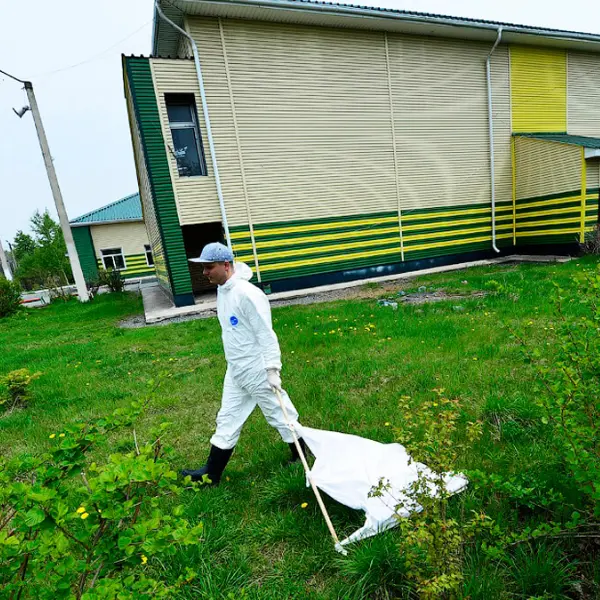
The body size of the tick does not exceed 1 mm, so it is impossible to detect it with a glance. Moreover, insects hide in the grass. But there is still a way to check whether ticks have settled in your area. This is an old elementary method, it does not require special skills, anyone can conduct such an experiment.
You will need a large towel to check the area for ticks. It is better that it be white, or at least just light. Fix the towel on a long stick in such a way that it looks like a flag. Take the “flag” so that the towel is completely on the ground and run it all over the site. If there are ticks on the territory, several of them will definitely catch on the towel. You need to experiment in the morning at 8-9 o’clock, when there is no dew on the grass.
How to protect yourself from ticks?
Despite all the assurances of manufacturers, household repellents and pet collars are not able to protect against ticks. It is impossible to spray mosquitoes with a spray or put a spiral that repels the smell so that ticks do not approach you and your site.
There are only three reliable ways to avoid a tick infestation:
- Closed clothing, through which ticks will not reach the skin and will not be able to bite through it.
- Encephalitis vaccination. Unfortunately, not all tick-borne diseases have a vaccine. But from the most common of them – encephalitis – you can still protect yourself and the animal.
- Full-scale professional disinsection of the site from ticks.